Because of You
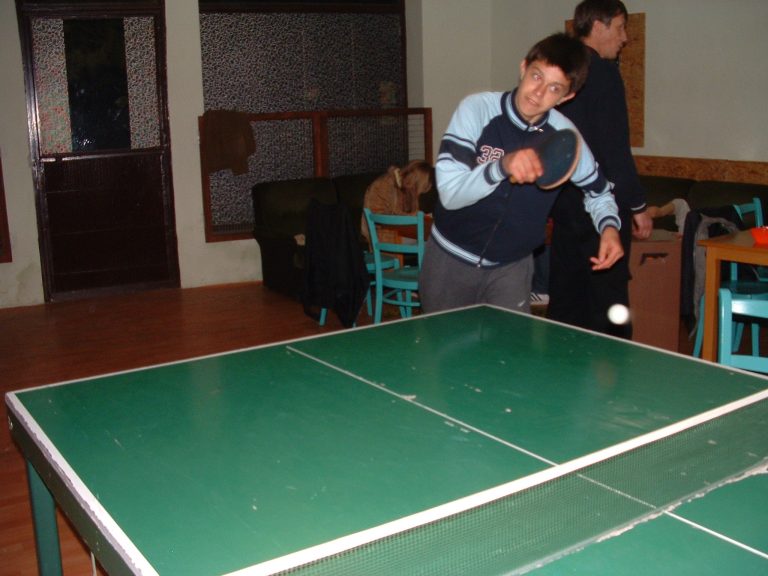
Young people in Northern Ireland are being reached through the following ministries:
- camps
- clubs
- dance & music teams
- praise & worship events
- school ministries
- sports ministry
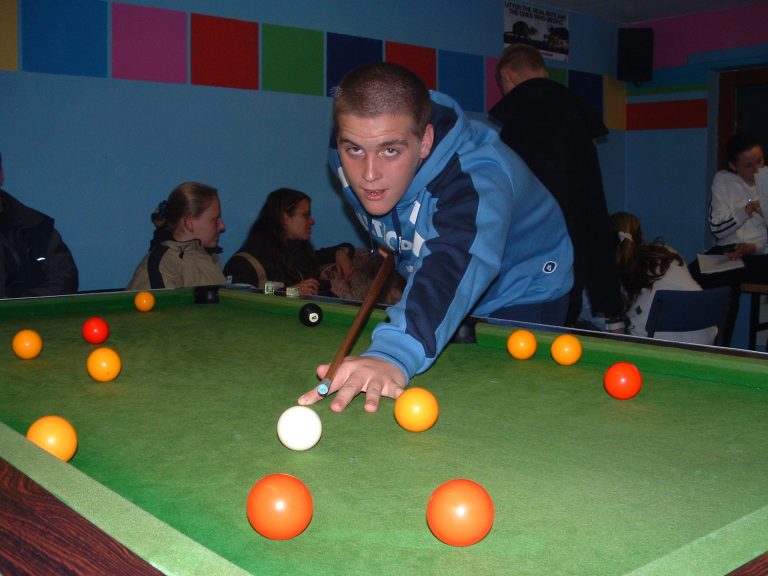
- youth centre
- coffee bar
The team in Northern Ireland has been reaching out with the good news of Jesus Christ for sixty years. For the past six decades they have strived to be faithful to the Bible and the church while remaining relevant to the culture in which God has called them to work, the ever-changing world of youth!
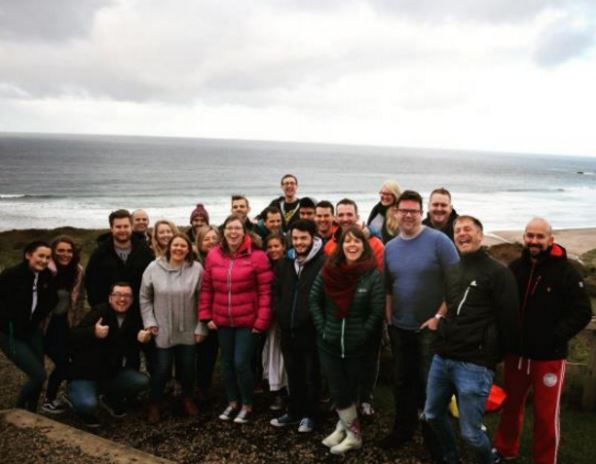
While there is a staff team or youth workers, evangelists, preachers and support workers it is primarily a volunteer movement. Each week hundreds of volunteers are serving in centres, programs and projects. Each volunteer is giving time to fulfil the mission of bringing the Gospel to the unchurched young people of Northern Ireland.
In order to stay relevant, they are constantly adapting programs and projects. Over the years, Youth for Christ has been working across the six counties in Northern Ireland through Gospel crusades, rallies, film presentations, coffee bars, music and arts. Recently the most effective tools have been local Youth for Christ centres, schools work, creative arts and summer missions. In the future, they hope to introduce new ministries that will achieve the mission and vision.
About Northern Ireland
Northern Ireland
Introduction
Northern Ireland (Irish: Tuaisceart Éireann, Ulster Scots: Norlin Airlann) is one of the four countries of the United Kingdom. Situated in the north-east of the island of Ireland, it shares a border with the Republic of Ireland to the south and west. At the time of the 2001 UK Census, its population was 1,685,000, constituting about 30% of the island's total population and about 3% of the population of the United Kingdom.
Northern Ireland consists of six of the nine counties of the Irish province of Ulster. It was created as a distinct division of the United Kingdom on 3 May 1921 under the Government of Ireland Act 1920, though its constitutional roots lie in the 1800 Act of Union between Great Britain and Ireland. For over 50 years it had its own devolved government and parliament. These institutions were suspended in 1972 and abolished in 1973. Repeated attempts to restore self-government finally resulted in the establishment of the present-day Northern Ireland Executive and Northern Ireland Assembly. The Assembly operates on consociational democracy principles requiring cross-community support.
Northern Ireland was for many years the site of a violent and bitter ethno-political conflict — the Troubles — which was caused by divisions between nationalists, who are predominantly Roman Catholic, and unionists, who are predominantly Protestant. Unionists want Northern Ireland to remain as a part of the United Kingdom, while nationalists wish for it to be politically reunited with the rest of Ireland, independent of British rule. Since the signing of the "Good Friday Agreement" in 1998, most of the paramilitary groups involved in the Troubles have ceased their armed campaigns.
Due to its unique history, the issue of the symbolism, name and description of Northern Ireland is complex, and similarly the issue of citizenship and identity. In general, Unionists consider themselves British and Nationalists see themselves as Irish, though these identities are not necessarily mutually exclusive.
Geography
Location
Total Area: 13,843 sq km
Climate
The whole of Northern Ireland has a temperate maritime climate, rather wetter in the west than the east, although cloud cover is persistent across the region. The weather is unpredictable at all times of the year, and although the seasons are distinct, they are considerably less pronounced than in interior Europe or the eastern seaboard of North America. Average daytime maximums in Belfast are 6.5 °C (43.7 °F) in January and 17.5 °C (63.5 °F) in July. The damp climate and extensive deforestation in the 16th and 17th centuries resulted in much of the region being covered in rich green grassland.
People
Nationality and Culture
With its improved international reputation, Northern Ireland has recently witnessed rising numbers of tourists. Attractions include cultural festivals, musical and artistic traditions, countryside and geographical sites of interest, public houses, welcoming hospitality and sports (especially golf and fishing). Since 1987 public houses have been allowed to open on Sundays, despite some opposition.
The Ulster Cycle is a large body of prose and verse centring around the traditional heroes of the Ulaid in what is now eastern Ulster. This is one of the four major cycles of Irish Mythology. The cycle centres around the reign of Conchobar mac Nessa, who is said to have been king of Ulster around the time of Christ. He ruled from Emain Macha (now Navan Fort near Armagh), and had a fierce rivalry with queen Medb and king Ailill of Connacht and their ally, Fergus mac Róich, former king of Ulster. The foremost hero of the cycle is Conchobar's nephew Cúchulainn.
Religion: The population of Northern Ireland was estimated as being 1,759,000 on 10 December 2008. In the 2001 census, 45.57% of the population identified as belonging to Protestant or other non-Catholic denominations (20.69% Presbyterian, 15.30% Church of Ireland, 3.51% Methodist, 6.07% other Christian/Christian related), 40.26% identified as Catholic, 0.30% identified with non-Christian religions and 13.88% identified with no religion. In terms of community background, 53.1% of the Northern Irish population came from a Protestant background, 43.8% came from a Catholic background, 0.4% from non-Christian backgrounds and 2.7% non-religious backgrounds. The population is forecast to pass the 1.8 million mark by 2011.
Languages: English, Irish, Ulster Scots
Education
Education in Northern Ireland differs slightly from systems used elsewhere in the United Kingdom. Unlike most areas of the United Kingdom, in the last year of primary school children sit the eleven plus transfer test, and the results determine whether they attend grammar schools or secondary schools. This system was due to be changed in 2008 amidst some controversy, with the exception of north Armagh where the Dickson Plan is in effect. The eleven plus has since been abolished with the majority of Grammar schools now holding their own entry test, Secondary pupils are not required to take such a test for entry.
Northern Ireland's state (controlled) schools are open to all children in Northern Ireland, although in practice are mainly attended by those from Protestant or non-religious backgrounds. There is a separate publicly funded school system provided for Roman Catholics, although Roman Catholics are free to attend state schools (and some non-Roman Catholics attend Roman Catholic schools). Integrated schools, which attempt to ensure a balance in enrolment between pupils of Protestant, Roman Catholic and other faiths (or none) are becoming increasingly popular, although Northern Ireland still has a primarily de facto religiously segregated education system. In the primary school sector, forty schools (8.9% of the total number) are Integrated Schools and thirty two (7.2% of the total number) are Gaelscoileanna.
Government
Northern Ireland has devolved government within the United Kingdom. There is a Northern Ireland Executive together with the 108 member Northern Ireland Assembly to deal with devolved matters with the UK Government and UK Parliament responsible for reserved matters. Elections to the Assembly are by single transferable vote with 6 representatives elected for each of the 18 Westminster constituencies. Northern Ireland is a distinct legal jurisdiction, separate from England, Wales and Scotland. It is also an electoral region of the European Union.
Northern Ireland elects 18 Members of Parliament (MP) to the House of Commons; not all take their seats, however, as the Sinn Féin MPs (currently five) refuse to take the oath to serve the Queen that is required of all MPs. The Northern Ireland Office represents the UK government in Northern Ireland on reserved matters and represents Northern Irish interests within the UK government. The Northern Ireland office is led by the Secretary of State for Northern Ireland, who sits in the Cabinet of the United Kingdom.
The main political divide in Northern Ireland is between Unionists or Loyalists who wish to see Northern Ireland continue as part of the United Kingdom and Nationalists or Republicans who wish to see Northern Ireland join the rest of Ireland, independent from the United Kingdom. These two opposing views are linked to deeper cultural divisions. Unionists are overwhelmingly Protestant, descendants of mainly Scottish, English, Welsh and Huguenot settlers as well as Old Gaelic Irishmen who had converted to one of the Protestant denominations. Nationalists are predominantly Catholic and descend from the population predating the settlement, with a minority from Scottish Highlanders as well as some converts from Protestantism. Discrimination against nationalists under the Stormont government (1921–1972) gave rise to the nationalist civil rights movement in the 1960s. Some Unionists argue that any discrimination was not just because of religious or political bigotry, but also the result of more complex socio-economic, socio-political and geographical factors. Whatever the cause, the existence of discrimination, and the manner in which Nationalist anger at it was handled, was a major contributing factor which led to the long-running conflict known as the Troubles. The political unrest went through its most violent phase between 1968 and 1994.
As of 2007, 36% of the population define themselves as Unionist, 24% as Nationalist and 40% define themselves as neither.[30] According to a 2009 opinion poll, 69% express long term preference of the maintenance of Northern Ireland's membership of the United Kingdom (either directly ruled or with devolved government), while 21% express a preference for membership of a united Ireland.[31] This discrepancy can be explained by the overwhelming preference among Protestants to remain a part of the UK (91%), while Catholic preferences are spread across a number of solutions to the constitutional question including remaining a part of the UK (47%), a united Ireland (40%), Northern Ireland becoming an independent state (5%), and those who "don't know" (5%).[32] Official voting figures, which reflect views on the "national question" along with issues of candidate, geography, personal loyalty and historic voting patterns, show 54% of Northern Ireland voters vote for Pro-Unionist parties, 42% vote for Pro-Nationalist parties and 4% vote "other". Opinion polls consistently show that the election results are not necessarily an indication of the electorate's stance regarding the constitutional status of Northern Ireland.
Most of the population of Northern Ireland are at least nominally Christian. The ethno-political loyalties are allied, though not absolutely, to the Roman Catholic and Protestant denominations and these are the labels used to categorise the opposing views. This is, however, becoming increasingly irrelevant as the Irish Question is very complicated. Many voters (regardless of religious affiliation) are attracted to Unionism's conservative policies, while other voters are instead attracted to the traditionally leftist, nationalist Sinn Féin and Social Democratic and Labour Party (SDLP) and their respective party platforms for Democratic Socialism and Social Democracy. For the most part, Protestants feel a strong connection with Great Britain and wish for Northern Ireland to remain part of the United Kingdom. Many Catholics however, generally aspire to a United Ireland or are less certain about how to solve the constitutional question. In the 2009 survey by Northern Ireland Life and Times, 47% of Northern Irish Catholics supported Northern Ireland remaining a part of the United Kingdom, either by direct rule (8%) or devolved government (39%).
Protestants have a slight majority in Northern Ireland, according to the latest Northern Ireland Census. The make-up of the Northern Ireland Assembly reflects the appeals of the various parties within the population. Of the 108 MLAs, 55 are Unionists and 44 are Nationalists (the remaining nine are classified as "other").
Economy
Want to know more? Show Full Profile
Explore YFC International
- EverYouth Drama Ministry » Evangelism Through Drama
- YFC Alumni Fellowship » Reconnect with old friends and the ministry of YFC.
- YFC Global Launch » Helping Young Leaders Achieve Their God-given Dreams!
- YFC University » Quality online courses on the Bible, Ministry, and the Christian Life.
- YFC Coaching » Assisting YFC Staff to grow and become more effective in bringing out the best in those around them.
- YFC World » STAFF ONLY